
Gas Station Profit Margins Explained: Fuel vs. Store vs. Car Wash
Fuel margins are razor-thin at 1-3%. Convenience store margins run 27-33%. Car wash margins hit 85-95%. If you blend them together, you cannot see where you are making money.
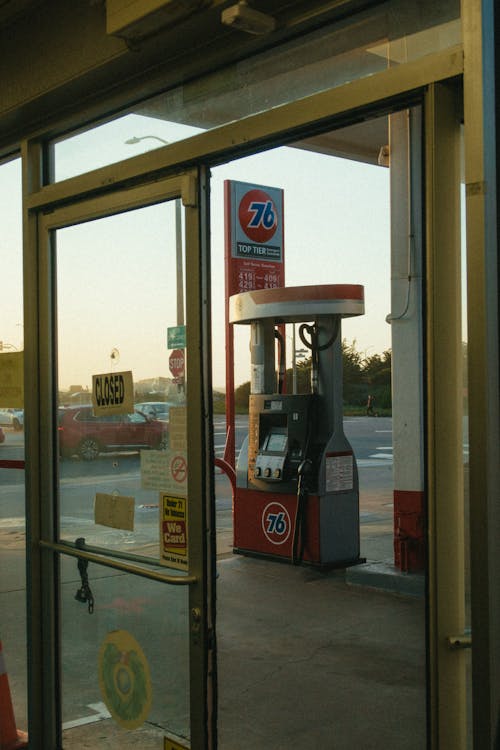
Gas station profit margins are one of the most misunderstood numbers in small business. Ask a station owner what their margin is and most will give you one number. That single number is useless - because a gas station is not one business, it is several businesses operating under one roof, each with radically different economics.
Understanding gas station profit margins means understanding each profit center separately: fuel, convenience store, car wash, prepared food, lottery, and ancillary services. Here is what the numbers actually look like.
Fuel Profit Margins: 1-3% Net
Gasoline and diesel are high-revenue, low-margin products. The gross profit on a gallon of regular gasoline averages 5-10 cents per gallon. After credit card processing fees (which run 1.5-3% of the transaction amount - roughly 5-10 cents per gallon at current prices), the net fuel margin drops to 1-6 cents per gallon.
On a percentage basis, that is a 1-3% net margin on fuel. A station pumping 200,000 gallons per month at 5 cents net margin generates $10,000/month in fuel profit - barely enough to cover rent in many markets.
This is why fuel is a traffic driver, not a profit center. The pump brings customers to the lot; the store, car wash, and food operation convert that traffic into actual profit.
What Affects Fuel Margins
- Branded vs. unbranded: Branded stations (Shell, BP, ExxonMobil) typically have tighter margins due to brand pricing requirements but benefit from brand loyalty and fleet card volume
- Credit card mix: Cash transactions preserve margin; credit card transactions eat 5-10 cents/gallon in fees
- Competitive density: Stations in clusters (highway exits, busy intersections) face more price pressure
- Fuel grade mix: Premium and diesel typically carry higher per-gallon margins than regular
- Jobber pricing: Your contract terms, rack-plus pricing, and delivery schedules all affect what you pay for fuel
Tracking fuel margins accurately requires daily fuel inventory reconciliation by grade - not monthly estimates. A 2-cent-per-gallon error on 200,000 gallons is $4,000/month in invisible margin loss.
Convenience Store Margins: 27-33% Gross
The convenience store is where gas stations actually make money. Overall c-store gross margins average 27-33%, but individual categories vary significantly:
| Category | Gross Margin | Notes |
|---|---|---|
| Tobacco / cigarettes | 15-20% | High volume, tight margin, heavy shrinkage risk |
| Packaged beverages | 35-50% | Cooler management and vendor deal capture are key |
| Snacks / candy | 40-50% | Impulse buy category, planogram placement matters |
| Prepared food / deli | 40-60% | Highest margin, but waste/spoilage risk |
| Beer / wine | 25-35% | Regulated, varies by state |
| General merchandise | 40-50% | Auto supplies, phone chargers, sunglasses |
The difference between a station that nets $60K and one that nets $200K is often category management. Owners who track category-level merchandise margins know which product lines to expand and which are dragging the average down. Owners who see one blended store number cannot make those decisions.
Car Wash Margins: 85-95% Gross
Car wash operations deliver the highest margins of any gas station revenue stream at 85-95% gross. Variable costs are minimal - water, chemicals, and electricity - while the equipment generates revenue with minimal labor.
A single-bay automatic car wash generating $10,000/month in revenue keeps $8,500-9,500 after direct costs. Monthly subscription and unlimited-wash programs are growing rapidly and create predictable recurring revenue - but they require proper car wash accounting to track deferred revenue, per-wash economics, and wash-with-fill-up discount allocation.
Prepared Food Margins: 40-60% Gross
Foodservice is the fastest-growing and highest-margin category in convenience retail. A well-run deli or hot food program can add $5,000-15,000/month in gross profit to a station.
The catch is waste. Food spoilage and overproduction can consume 10-15% of food cost if not tracked daily. Prepared food and deli accounting separates food cost from packaged goods, tracks waste by day and item, and shows per-item profitability - the data you need to optimize the menu without guessing.
Lottery, ATM, and Money Order Margins
These ancillary services add up:
- Lottery: 5-7% commission on sales, plus bonuses for large winners. Scratch-off inventory tracking is essential to prevent employee theft (average loss: $5,000/year per store without controls)
- ATM: $1-3 surcharge per transaction. An ATM doing 300 transactions/month at $2.50 generates $750/month with almost no cost
- Money orders: $0.50-1.50 per transaction fee. High-volume locations can generate $500-1,500/month but carry BSA/AML compliance requirements
Each stream is small individually, but together they can represent $2,000-5,000/month in high-margin revenue. Without multi-stream revenue tracking, most owners have no idea what these lines actually contribute.
Why Blended Margins Are Dangerous
If your accountant gives you one profit margin number for your entire operation, you have a problem. A station with a 6% blended net margin could be:
- Making 1% on fuel, 30% on store, 90% on car wash, and losing money on deli waste - OR
- Making 3% on fuel, 20% on store (theft/shrinkage problem), and not tracking anything else
Both scenarios produce the same blended number, but they require completely different actions. One needs food cost controls; the other needs shrinkage investigation. A single number tells you nothing.
FuelCFO separates every revenue stream, reconciles daily, and delivers a one-page monthly owner report that shows exactly what each part of your operation earns. If your current books give you one blended number, book a free books review and see the difference.